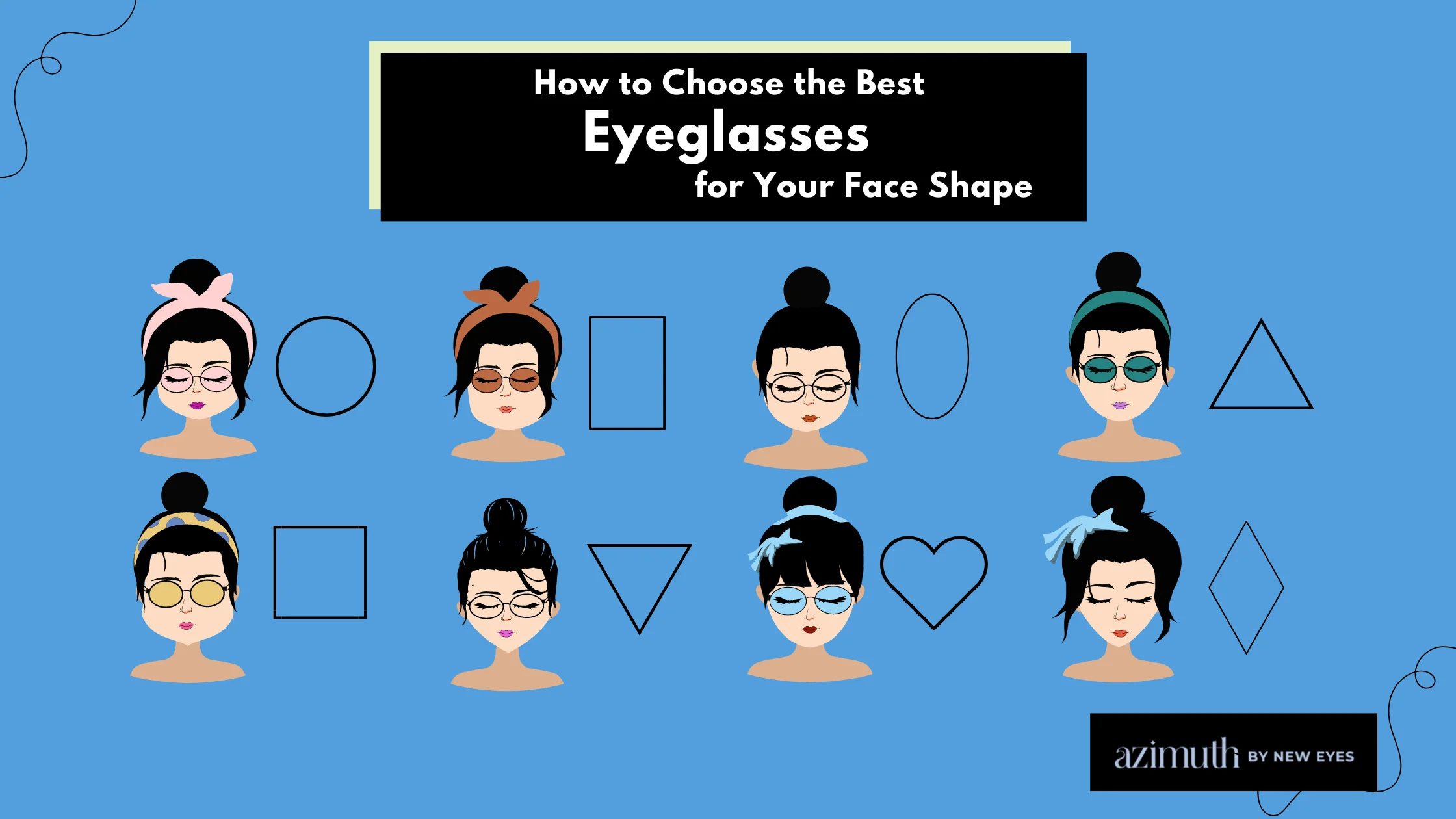
How to Choose the Best Eyeglasses for Your Face Shape
The best eyeglasses are not determined by face shape alone. Proportion, bridge fit, lens height, temple length, personal style, and prescription all influence whether a frame looks balanced and feels comfortable. Face-shape advice is useful as a starting point, but it should help you narrow your options rather than impose strict rules. A frame that technically “breaks” a style guideline may still be the right choice if its measurements suit your face and you enjoy wearing it.
What eyeglasses buyers get wrong first
A common mistake is choosing frames by color or brand before checking measurements. Even an attractive frame can slide down, pinch behind the ears, or make the eyes look unusually close together if the bridge and lens width are wrong. Another mistake is assuming that a face has one perfectly defined shape. Many people fall between oval and oblong, or between round and heart-shaped, so it is more helpful to compare overall proportions than to search for an exact category.
Buyers also tend to confuse frame width with lens width. A frame marked 53mm usually refers to the horizontal width of one lens, not the full width from hinge to hinge. The complete measurement may be printed inside the temple as three numbers, such as lens width, bridge width, and temple length. Compare those numbers with a pair you already wear comfortably, but remember that lens shape and frame construction can make two frames with identical numbers fit differently.
How to choose the right eyeglasses step by step
Start with your face proportions
Look at your face from the front with your hair pulled away, then consider three features: the widest area of your face, the length from forehead to chin, and the shape of your jaw. A round face often has softer angles and similar width and length. Angular rectangular frames can add definition, while gently upswept or geometric shapes can create structure without looking severe.
An oval face is generally longer than it is wide, with a relatively balanced forehead and jaw. Many frame shapes can work well, but very narrow frames may make the face look longer. Medium-width rectangles, softly squared styles, and rounded frames can all be good options when their proportions remain close to the width of the cheekbones.

A square face usually has a broader forehead, pronounced cheekbones, and a defined jaw. Round or oval lenses can soften the overall appearance, while thin rims may keep a strong shape from looking heavy. A rectangular frame can also work if it is not excessively wide or thick and if the corners complement, rather than compete with, your natural angles.
A heart-shaped face often has a wider forehead and a narrower chin. Frames with a lighter upper rim, rounded lower edges, or a slightly wider bottom can help create visual balance. Cat-eye designs vary considerably, so pay attention to where the outer corners rise and whether the frame adds too much width at the temples.
Long or oblong faces may benefit from frames with more lens depth, a noticeable bridge, or decorative details that add horizontal emphasis. Very shallow lenses can make the face appear longer. If your face has a diamond-like pattern, where the cheekbones are prominent and the forehead and jaw are narrower, oval styles and softly curved frames can reduce the appearance of sharp transitions.
Check the frame against your features
The top of the frame should generally follow the line of your eyebrows without covering them completely, although sunglasses and fashion frames may sit differently. Your pupils should appear reasonably centered within the lenses when you look straight ahead. The frame should be at least as wide as your cheekbones, but excessive width can create gaps at the temples and make the glasses feel unstable.
Pay attention to the bridge because it determines how the frame sits on your nose. A frame that rests only on the cheeks is usually too large or has the wrong bridge design. If you have a low nose bridge or a narrower nasal area, adjustable nose pads or a dedicated low-bridge fit may offer better stability. The temples should rest comfortably along the sides of your head without pressing inward, and the ends should not extend awkwardly far behind your ears.
Fit, materials, and lens decisions
Material affects both appearance and daily comfort. Acetate frames often provide rich color, polished edges, and a substantial feel. They can be a good choice if you want a more noticeable style, though thick acetate may feel heavy depending on the prescription and lens size. Metal frames are often lighter and visually delicate, with adjustable nose pads that can make fine-tuning easier. They may require more care if the frame is very thin or if you are hard on your glasses.
Nylon and other lightweight materials can be useful for active routines, travel, or anyone who dislikes a heavy frame. Flexible construction is not the same as indestructible construction, so hinges and lens mounting still matter. Ask an optical professional whether the material and frame shape are suitable for your prescription, especially if your lenses are strong or require a particular thickness.
How to Pick the Best Glasses for Your Face Shape | Style Theory
Lens size affects more than style. Larger lenses can provide a wider field of view, but they may also increase lens weight and edge thickness. Smaller lenses can be lighter and more discreet, although they may not suit every prescription or visual need. Common lens options include scratch-resistant treatments, anti-reflective coatings, and materials selected for impact resistance or reduced thickness. The right choice depends on your prescription, working distance, screen use, lifestyle, and budget rather than on a universal “best” lens.
If you switch between several pairs, organization can prevent scratches and misplaced glasses. A Peeper Keepers eyewear holder, for example, may suit someone who wants a pair easy to reach while moving around the house or workplace. A holder is not a substitute for a protective case, so keep your main pair in a hard case when carrying it in a bag.
Style choices that remain wearable
Color should complement both your complexion and the clothes you actually wear. Black, tortoiseshell, and clear frames are versatile, while burgundy, navy, olive, or metallic finishes can add interest without becoming difficult to coordinate. Consider whether you want the frame to blend with your face or act as a defining accessory. A minimal metal style may feel understated, whereas a bold acetate frame can make the glasses a central part of an outfit.
Brand identity can guide style, but it should not override fit. DONNA frames may appeal to shoppers looking for a distinctly feminine or polished direction, while Michael Kors can suit those drawn to recognizable fashion styling and refined details. These names describe design language, not a guarantee that every frame will suit every face. Check the individual model’s measurements, bridge shape, weight, and return policy before deciding.
Sizing labels can be confusing across collections. A frame listed as men 57mm may refer to a 57mm lens width and still fit differently from another frame with the same number because of its bridge and overall shape. Do not reject a frame solely because of a category label such as men’s or women’s; compare the actual measurements and how the frame sits on your face.
Quick checklist before you buy
Confirm the lens width, bridge width, temple length, and total frame width. Check that your pupils sit close to the optical centers, the frame does not slide when you look down, and the temples do not pinch. Make sure the frame is wide enough for your cheekbones without extending substantially beyond them. Consider whether the material, lens size, and hinge design suit your routine. Ask about lens thickness, coatings, warranty coverage, adjustment services, and the return or exchange period.
Finally, view the glasses in natural light and from several angles if possible. Take a photograph from straight on, because mirrors reverse your image and can make small asymmetries less obvious. The most successful pair is one that balances your features, meets your visual needs, and is comfortable enough that you will want to wear it every day. Face-shape guidance can point you toward promising styles, but careful measurement and honest attention to fit should make the final decision.
FAQ: How to Choose the Best Eyeglasses for Your Face Shape
How do I choose eyeglasses for my face shape?+
Start by identifying your face’s general shape, such as oval, round, square, heart, or long. Choose frames that contrast with your features—for example, angular frames can add definition to a round face, while softer or rounded frames can balance a square face. Face shape is only a starting point, so also check frame width, bridge fit, and comfort.
What eyeglasses look best on a round face?+
Angular, rectangular, or geometric eyeglasses can add definition to a round face. Look for frames that are slightly wider than the fullest part of your face without extending far beyond your temples. Avoid choosing frames based on shape alone; the frame should sit securely without pinching or sliding.
How should eyeglasses fit before I buy them?+
The frame should sit comfortably on your nose, with the bridge making steady contact without pressure. Your eyes should appear near the center of the lenses, the temples should rest securely without squeezing, and the frame should not slide when you move. Check the listed frame measurements against a pair you already own for a better starting point.
Which eyeglasses frame material is best for everyday use?+
Acetate and other plastic frames offer many colors and styles, while metal frames are often slimmer and lighter-looking. Flexible materials can be useful if you frequently handle or carry your glasses, but durability depends on the frame design and construction. Choose the material that feels comfortable and suits your daily routine rather than relying on appearance alone.
What should I check before ordering eyeglasses online?+
Confirm your prescription details, frame measurements, lens options, return policy, and any fitting or adjustment services. Compare the frame width, bridge width, and temple length with glasses that fit you well, and review the lens coatings included in the price. Before completing the order, make sure the frame shape and color work with your style as well as your face shape.